Roof Repair · the USA
Technicians review the full roof surface and surrounding details before any material is ordered or cut. Findings are recorded so the property owner receives a clear summary of what was addressed and what remains under observation.
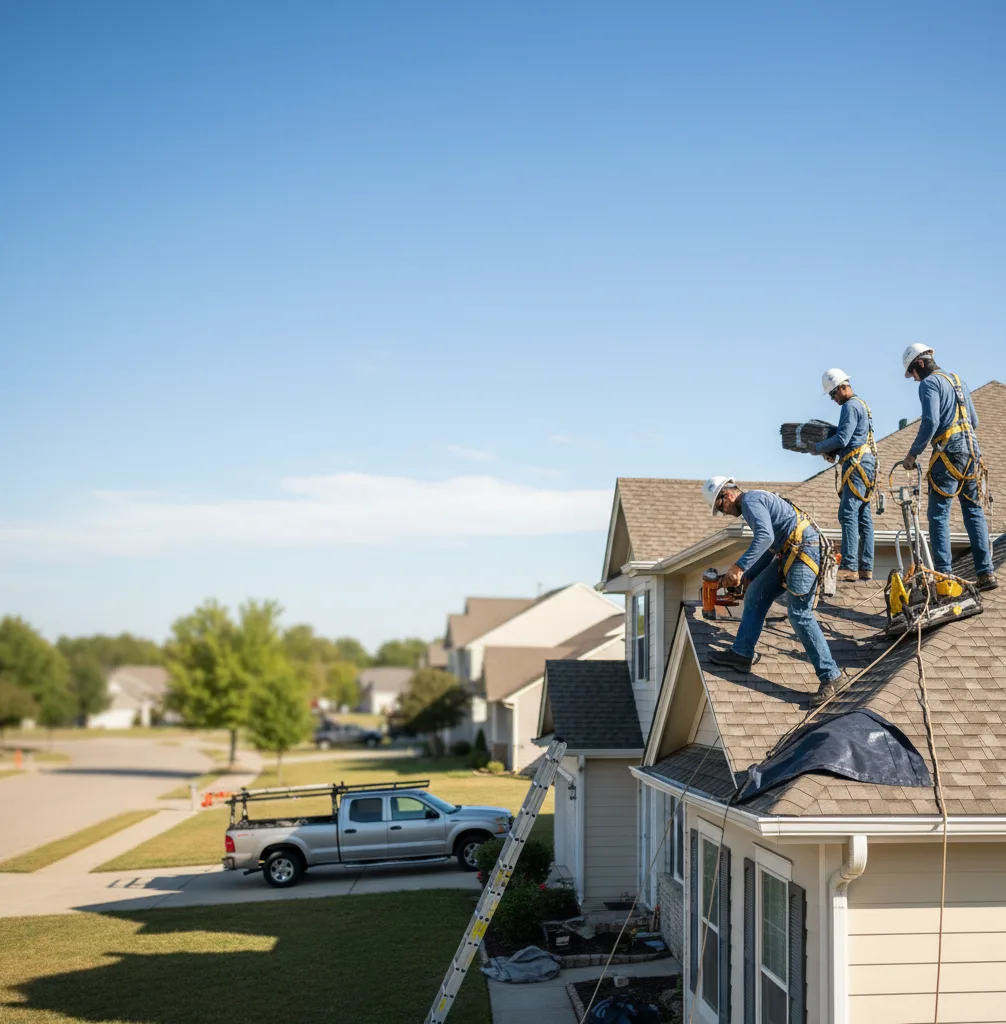
Flat roofs collect water in low spots and around penetrations, which speeds up wear on the membrane. Technicians check seams, flashings, and drains first because these spots show the earliest signs of separation or cracking. When a blister or split turns up, the surrounding material gets checked to see if the damage is isolated or part of a larger pattern from age, foot traffic, or poor original installation. Repairs then focus on cleaning the surface, applying compatible adhesives or heat welding, and restoring the waterproof layer without disturbing sound sections. Drainage performance is verified after the work to confirm water continues to move away from the building rather than pooling again.
A visual walk-through can show ponding, cracked coatings, or vegetation growth, yet some issues only appear when the surface is probed or when interior ceilings are examined for stains. Technicians also note the condition of expansion joints and HVAC curbs because movement at these points often leads to recurring leaks. Homeowners or property managers can look for soft spots underfoot or changes in interior humidity after rain, which sometimes indicate that moisture has already reached the deck. Recording these observations helps prioritize which areas need immediate attention and which can be monitored until the next scheduled review.
FAQ

Interior water marks can come from roof issues but may also trace to plumbing or condensation in the attic. A roof inspection checks the surface and flashing first. If those areas are dry the source is often elsewhere. The inspection helps narrow it down before other trades are called.
Access, the number of layers already on the roof, and whether decking needs attention all affect the scope. Steeper pitches or limited ladder placement can add time. The inspection identifies these factors so the estimate reflects the actual work required.
Small problems can grow when water reaches the decking or insulation. An early check often limits the repair to the original area. If the roof is already older it is useful to know the overall condition before deciding how long to wait.