Roof Repair · the USA
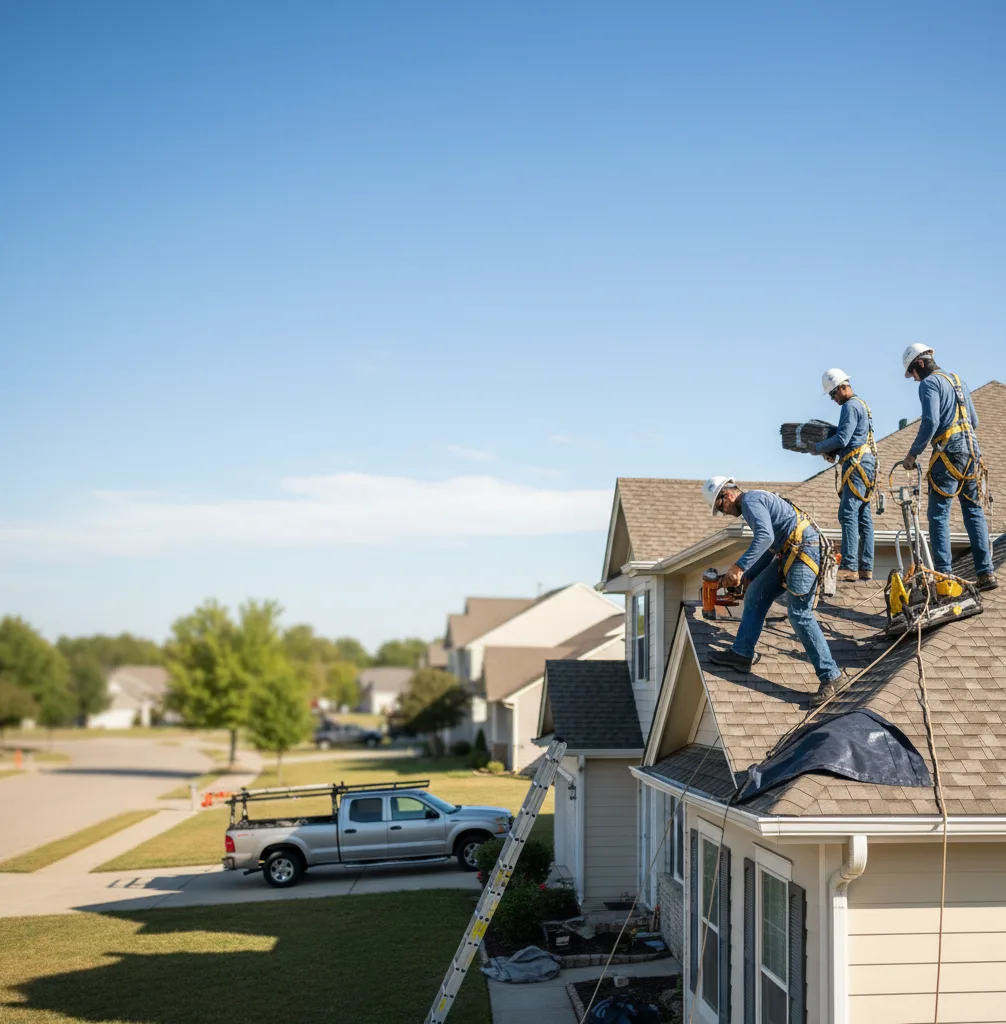
Crews document the leak path with photos and notes before any material is removed. Materials are chosen to match the existing roof rather than using a single universal patch product. A final walkthrough confirms the repaired section performs as expected under normal conditions and may lead to emergency roof repair if issues recur.
Water stains on ceilings or walls often appear first. Peeling paint or soft spots in attic insulation tend to follow. Homeowners may also notice drips during heavy rain or musty odors that linger after storms pass. A visual walk around the property can reveal areas that need shingle replacement, cracked flashing around vents, or debris buildup in valleys that keeps water from draining. Inside the attic, daylight coming through the decking or darkened wood along rafters gives another clear clue. These indicators help narrow down where roof inspection is needed before any tools are unpacked.
The crew removes the damaged section layer by layer until sound material is reached on all sides. New underlayment is installed if the old layer is saturated, then matching shingles or membrane is fitted and sealed at every seam. Flashing is replaced or resealed where pipes, chimneys, or skylights meet the roof plane. Debris is cleared from gutters and downspouts so water can move away from the structure once the job is complete and roof maintenance can begin.
FAQ

Interior water marks can come from roof issues but may also trace to plumbing or condensation in the attic. A roof inspection checks the surface and flashing first. If those areas are dry the source is often elsewhere. The inspection helps narrow it down before other trades are called.
Access, the number of layers already on the roof, and whether decking needs attention all affect the scope. Steeper pitches or limited ladder placement can add time. The inspection identifies these factors so the estimate reflects the actual work required.
Small problems can grow when water reaches the decking or insulation. An early check often limits the repair to the original area. If the roof is already older it is useful to know the overall condition before deciding how long to wait.